Dinosaurs have been movie stars for decades. From giant T. rexes chasing characters across the screen to prehistoric predators hunting their next meal, movies, TV shows, books, and games have shaped the way many of us picture dinosaurs. But how accurate are those depictions? As paleontologists discover new fossils and take a closer look at existing evidence, our understanding of dinosaurs continues to change. Some were bigger than they appear on screen, some had feathers, and others never had the features Hollywood gave them in the first place.
At Prehistoric Park, a dinosaur park in Henderson, Louisiana, you can come face-to-face with life-sized prehistoric creatures while learning more about the animals that once roamed the Earth. For families searching for things to do in Henderson, LA, our outdoor Dinosaur Trail offers a fun way to compare the dinosaurs you've seen on screen with what scientists know about the real creatures.

Tyrannosaurus Rex: The King of the Dinosaurs
Few dinosaurs are as recognizable as the Tyrannosaurus rex. Pop culture has turned the T. rex into the ultimate prehistoric villain, usually complete with a thunderous roar, scaly skin, enormous teeth, and an unstoppable appetite.
Pop Culture: Movies often portray T. rex as a fast-moving predator that can chase down almost anything in its path. Its appearance is typically completely scaly, with a huge head, tiny arms, and rows of intimidating teeth.
What Science Says: Scientists agree on plenty of those features. T. rex really did have an enormous skull, powerful jaws, two-fingered arms, and strong hind legs. Fossilized skin impressions also provide evidence that at least parts of its body were covered in scales.
One area that's still debated is feathers. Relatives of T. rex had feather-like coverings, leading scientists to consider whether younger T. rexes may have had some fuzz or feathers. Exactly what an adult looked like from head to toe is still being studied.
At Prehistoric Park, you can meet a 40-foot robotic T. rex along the Dinosaur Trail. Seeing this massive predator up close gives you a whole new appreciation for why T. rex has remained one of the world's most famous dinosaurs. It's one of the many reasons our prehistoric adventure stands out among Henderson, LA attractions for families.

Dilophosaurus: No Frill, No Venom?
If you've seen Dilophosaurus in the movies, there's a good chance you picture a relatively small dinosaur with a colorful neck frill and the ability to spit venom. It makes for a memorable movie monster, but those famous features are Hollywood creations.
Pop Culture: Dilophosaurus is often depicted raising a large, colorful frill around its neck before spraying venom at its target.
What Science Says: There's no fossil evidence showing that Dilophosaurus had an expandable neck frill or could spit venom. In reality, it was a much larger predator than its most famous movie portrayal suggests, reaching around 20 feet in length.
Its real standout feature was a pair of thin crests on top of its head. Scientists aren't completely certain what the crests were used for, but they may have helped with display or recognizing other members of the species.
The real Dilophosaurus didn't need fictional features to be fascinating. For families searching for attractions near Lafayette, LA that combine outdoor fun with a little learning, seeing creatures like Dilophosaurus up close can turn a day trip into a prehistoric adventure.

Spinosaurus: More at Home Near the Water
With its enormous sail and crocodile-like snout, Spinosaurus already looks like something created for the big screen. Pop culture has often portrayed it as a massive land predator capable of taking on almost any other dinosaur, but modern discoveries have changed the way scientists picture this unusual creature.
Pop Culture: Spinosaurus is often shown as a towering land predator, running across dry land and battling other enormous carnivores.
What Science Says: Spinosaurus appears to have been highly adapted to a lifestyle closely connected to water. Its long, narrow jaws and conical teeth were well suited for catching fish, and fossil discoveries have continued to shape the debate over how much time it spent swimming versus walking on land.
Scientists have also learned more about its unusual proportions, including its distinctive tail and giant sail. The result is an animal that may have looked and behaved quite differently from the movie monster many people first encountered.
At approximately 50 feet long, the life-sized Spinosaurus at Prehistoric Park is one of the can't-miss creatures along the Dinosaur Trail. If you're searching for things to do near Breaux Bridge, LA, standing beside a prehistoric predator this size makes for a pretty memorable family outing.

Stegosaurus: Those Plates Weren't Just Armor
With a tiny head, rows of enormous plates, and a spiked tail, Stegosaurus is one dinosaur that pop culture generally makes pretty easy to recognize.
Pop Culture: Stegosaurus is usually portrayed as a slow, peaceful plant eater protected by armor-like plates along its back and dangerous spikes on its tail.
What Science Says: Stegosaurus really did have its famous plates and tail spikes, but the purpose of those plates is more complicated than simply providing armor. Scientists have proposed that they may have helped with display, species recognition, or even temperature regulation.
There's another major misconception created by the way dinosaurs are grouped together in movies, cartoons, and toys. Stegosaurus lived during the Late Jurassic Period, while dinosaurs like T. rex and Triceratops appeared much later during the Late Cretaceous. Despite how often you see them together in pop culture, a Stegosaurus and T. rex would never have crossed paths.
At Prehistoric Park, creatures from different prehistoric periods come together along one trail, giving families the chance to compare dinosaurs that lived millions of years apart. That mix of education and adventure makes the park a unique option when looking for things to do near Lafayette, LA with kids.

Triceratops: More Than a Prehistoric Rhino
Three horns, a giant frill, and a powerful four-legged body make Triceratops one of the easiest dinosaurs to recognize.
Pop Culture: Triceratops is often treated like a prehistoric rhinoceros, charging straight toward predators and using its horns primarily as weapons.
What Science Says: Its horns could certainly have offered protection, but defense may not have been their only purpose. Scientists have also studied evidence suggesting that the horns and frill played a role in display, recognition, and competition between Triceratops.
Unlike Stegosaurus, Triceratops really did live alongside T. rex near the end of the Cretaceous Period. Fossil evidence even gives scientists clues about interactions between the two famous species.
Triceratops was also incredibly well equipped for its plant-based diet. It had hundreds of teeth arranged in dental batteries that allowed it to process tough vegetation throughout its lifetime.
See how its famous horns and frill compare to the version you've seen on screen when you encounter a life-sized Triceratops at Prehistoric Park. If you're exploring attractions near Baton Rouge, the trip to Henderson gives young dinosaur fans the chance to swap the movie screen for a walk among prehistoric giants.

Dimetrodon: Wait...That's Not a Dinosaur?
Here's one fact that might surprise even longtime dinosaur fans: Dimetrodon wasn't actually a dinosaur.
Pop Culture: Because of its prehistoric appearance and enormous back sail, Dimetrodon is frequently grouped with dinosaurs in toys, books, games, and other dinosaur-themed entertainment.
What Science Says: Dimetrodon lived during the Permian Period, tens of millions of years before the first dinosaurs appeared. Even more surprisingly, it belongs to a branch of vertebrates more closely related to mammals than to dinosaurs.
Its enormous sail was supported by elongated spines extending from its vertebrae. Scientists have proposed several possible functions for the sail, including display and temperature regulation.
Spotting creatures like Dimetrodon alongside your favorite dinosaurs is a great reminder that prehistoric life included far more than dinosaurs alone. It's also part of what makes Prehistoric Park different from many other attractions near Baton Rouge, LA. Instead of simply seeing dinosaurs on a screen, families can explore the prehistoric world together outdoors.

Why Do Our Ideas About Dinosaurs Keep Changing?
If the dinosaurs you learned about as a kid look different from the ones scientists reconstruct today, that's part of what makes paleontology so exciting. Scientists use fossils to piece together clues about prehistoric animals. Bones can reveal size and body structure, teeth can tell us about diet, footprints can provide clues about movement and behavior, and rare skin or feather impressions can completely change how we picture an animal. Velociraptor is one of the best examples. Pop culture famously depicts it as a large, scaly predator. In reality, fossil evidence shows that Velociraptor had feathers, and the actual dinosaur was much smaller than its famous movie counterpart.
There are still plenty of mysteries left to solve. Scientists don't know the exact colors of most dinosaurs, and features made from soft tissue are far less likely to survive as fossils. As new discoveries are made, the dinosaurs we picture today may look different again in the future. For parents looking for educational things to do near Baton Rouge or Lafayette, this ever-changing science gives kids something new to discover each time they dive into the prehistoric world.
Experience a Dinosaur Park in Louisiana
Reading about dinosaurs is one thing. Standing next to a life-sized one is another.
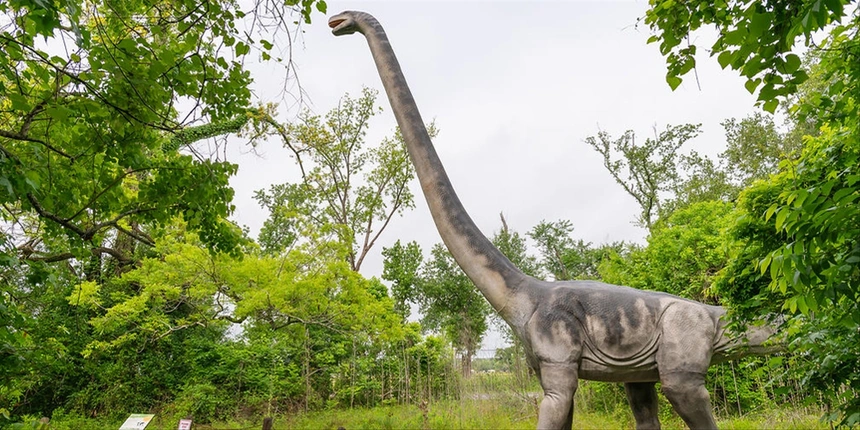
Prehistoric Park's outdoor Dinosaur Trail lets explorers of all ages walk among life-sized dinosaurs and prehistoric creatures, including animatronics that move and roar. After exploring the trail, families can keep the adventure going with hands-on fun at the Fossil Pit and time to play at the playground. As a family-friendly dinosaur park in Louisiana, Prehistoric Park offers an experience that brings together imagination, outdoor exploration, and prehistoric discoveries. Whether your child already knows every dinosaur name or is just beginning to become fascinated by these ancient creatures, there's plenty to see along the trail. Located in Henderson near Breaux Bridge, the park is also an easy addition to a day of exploring the area. If you've been searching for attractions in Henderson, LA, this is your chance to trade an ordinary outing for an adventure millions of years in the making.
Whether you're planning a family day trip, searching for things to do near Breaux Bridge, LA, or looking for a memorable dinosaur park in Louisiana, Prehistoric Park gives you the chance to get closer to the prehistoric world. Come walk among life-sized dinosaurs, discover which pop-culture myths fooled you, and find out how much you really know about your favorite prehistoric creatures. Plan your visit to Prehistoric Park in Henderson, Louisiana, and experience one of the area's most unique family adventures!